FLANZ Announces Release of New Advocacy Paper on Online Networked Learning
The Flexible Learning Association of New Zealand (FLANZ) is proud to announce the public release of our latest advocacy paper, “Enhancing Education Access in the New Zealand Schooling Sector Through Online Networked Learning”
This critical document was initiated as part of the International Council for Distance Education (ICDE) Global Advocacy Campaign and is supported by vital discussions that took place at the ICDE 2025 Policy Forum in Wellington in November 2025.
The Role of FLANZ FLANZ is dedicated to enhancing flexible learning practices across all sectors of education in New Zealand, advancing current thinking, and contributing to research in Open, Distance, and Flexible Learning (ODFL). We believe that ODFL will continue to be a crucial influence on the education system and needs to be actively sustained and supported. Through this paper, we are advocating for vital system changes to support flexible, equitable, and accessible networked learning for learners across all school networks.
The Challenge: Systemic Gaps in Networked Learning Our report highlights that the current schooling sector (Years 0–13) is hindered by a policy gap, unstable funding, and significant issues with equity and curriculum access. Currently, essential Virtual Learning Network (VLN) organizations—such as Kōtui Ako VLN, NetNZ, and Te Whare Angitu – operate on unsustainable funding models that compromise their ability to provide year-on-year services.
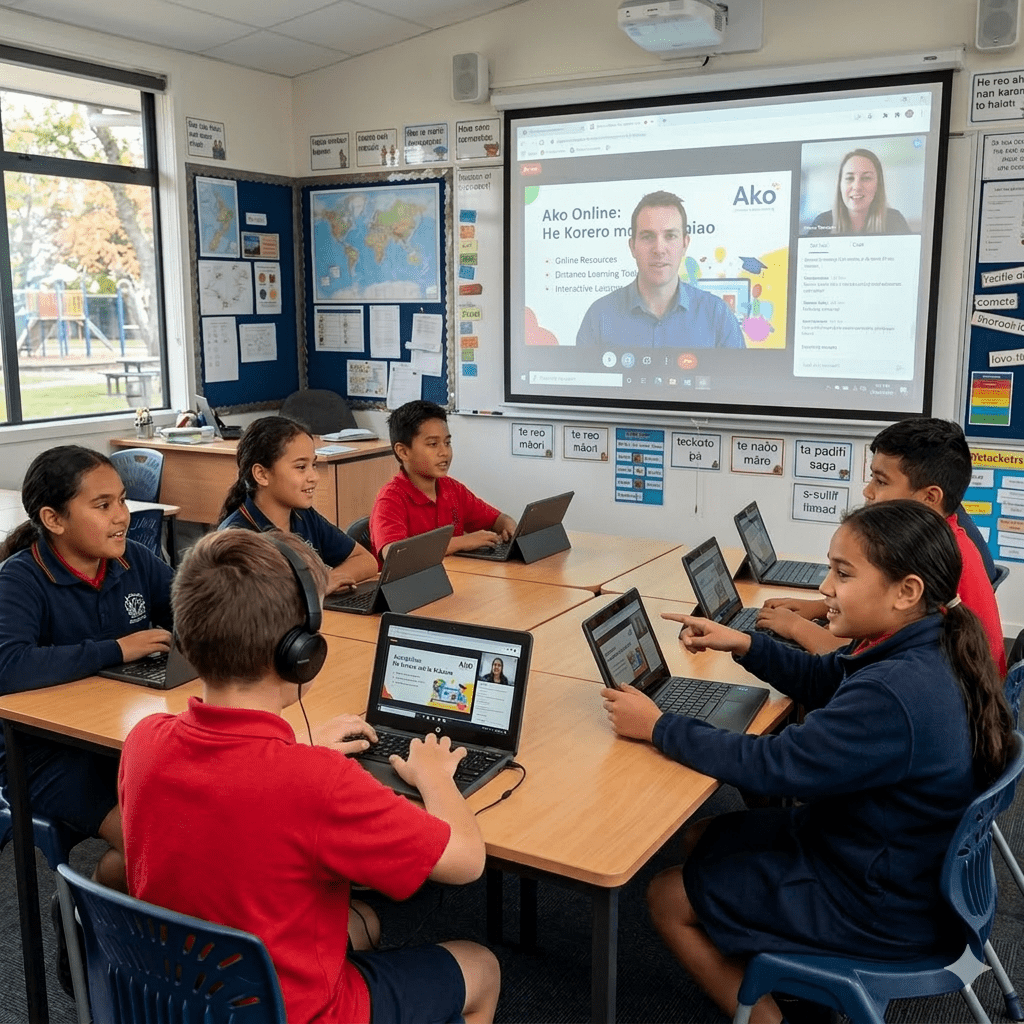
These systemic gaps disproportionately affect students in small, rural, and remote schools who rely on networked learning to access specialist subjects, including STEM, te reo Māori, and essential Mathematics and literacy support. Without reliable funding and regulation, the long-term planning and resilience of our schooling system are at risk.
A Roadmap for the Future: Key Recommendations To build an equitable education system that works for every student in New Zealand, regardless of their geographic location, FLANZ urges the Ministry of Education to implement the following:
- A Robust Policy and Regulatory Framework: Develop comprehensive policies and regulatory guidelines to govern networked learning, ensuring nationwide consistency and high standards.
- Formal Recognition: Provide official recognition and sustained support within the education system for the public VLN organizations that are instrumental in delivering networked learning to schools and kura.
- Sustainable Funding: Move away from year-on-year uncertainty by equipping VLN providers and participating schools with reliable funding to fully leverage the benefits of networked learning.
- Enhanced Teacher Capability: Integrate professional learning for online and hybrid environments into Initial Teacher Education programs to foster and sustain teacher expertise.
- Ongoing Research: Commit to further research into the outcomes and benefits of VLN learning for New Zealand school learners.
Join the Conversation: Upcoming April Webinar To unpack these findings and discuss the path forward, FLANZ will be hosting a follow-up webinar this April. We invite educators, policymakers, and stakeholders to join us in discussing how these recommendations can be implemented to support equitable curriculum access and sector resilience. We will share the exact date, time, and registration details on our channels soon.
We extend our sincere gratitude to the reviewers from VLN organizations, Kura Māori, and tertiary institutions whose deep knowledge of the education sector was invaluable in shaping this report.
Read the full advocacy paper here: “Enhancing Education Access in the New Zealand Schooling Sector Through Online Networked Learning.”