Welcoming Keynote Speaker: Dr. Selena Chan
FLANZ 2026 Conference: He Tāngata, in association with ODLAA
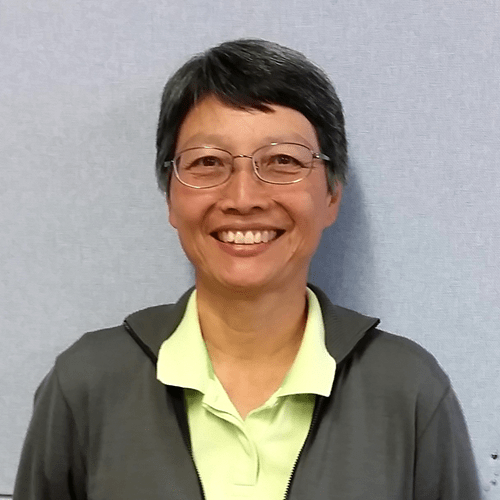
We are delighted to welcome Dr Selena Chan as keynote speaker for the FLANZ 2026 Conference, taking place at Otago Polytechnic in Ōtepoti Dunedin from 7–9 October 2026.
Selena is an educational/capability developer at Ara Institute of Canterbury/Te Pūkenga. Her work includes facilitating curriculum development, technology-enhanced learning/integration of AI projects, and academic educator development.
She has published widely in vocational research journals and recent publications include two monographs, Identity, pedagogy and technology-enhanced (2020) and Digitally enabling ‘learning by doing’ (2021); and two edited the books ‘Reshaping VET in Aotearoa (2022) and AI in Vocational Education (2025). She is the co-editor of the AVETRA International Journal of Training Research and on the editorial board for the Journal of Vocational Education and Training. She has recently submitted the co-edited book “Post-Reform of VET in Aotearoa” to record the achievements and challenges between 2019 and the reversal of reform in 2024/2025.
Keynote Abstract
The role of the educator in supporting the learning of ‘wisdom’ in the age of AI
As humans, we learn through social, and interactive activity. We learn through our relationships with other people (i.e. the sociocultural) and through encounters with the material world (i.e. the sociomaterial). Artificial Intelligence (AI) is not new as it has been around for since the 1950s. However, the mainstreaming of AI through Generative AI (Gen AI) has increased accessibility to information, much of which challenges how we define knowledge and thinking.
As educators/kaiako, the arrival of Gen AI requires us to evaluate and better understand what we teach. Are we introducing and assessing ‘content’ ? Or are we using ‘content’ as a context to help our learners/ākonga attain insight, discernment/judgment, and the abilities to continually learn, unlearn, and relearn? In short, how can educators support the attainment of wisdom? Distance learning represents an even more challenging learning environment. Establishing the precepts for sociocultural learning (Whanaungatanga, Manaaki, Aroha) along with providing opportunities for attaining connection to the sociomaterial require careful learning design, a commitment to the principles of relational learning (ako), and educator support.
In this presentation, the role of educators, the ways they design their lessons and teach, and how these practices require careful adaptation to the changes wrought by the arrival of Gen AI, are explored. Following this overview, some recommendations are postulated to use Gen AI to support both kaiako and ākonga to learn ‘to be wise’ are presented and discussed.
— Dr. Selena Chan
Don’t miss Selena’s keynote session—register for FLANZ 2026 today!