The FLANZ executive role provides direction and governance for the organisation. In addition, executive members contribute to initiatives depending on their availability and skills. Executive members are asked to attend monthly online meetings (late afternoons) as well as one full day planning meeting in person (normally October). Costs are paid for attendance at the planning meeting, but the time needs to be made available by the member.
Under the 2024 Constitution, the Executive Committee roles have a two year term.
The executive role is flexible, allows for engagement and activity that fits with each member’s situation, and offers opportunities to work with peers nationally and internationally. If you have a passion for flexible learning and would like to be at the forefront of activity and research in open, distance and flexible learning, please consider standing for a position on the committee.
 | Ralph Springett (President) is the Manager of the Assessment Centre at the Open Polytechnic of New Zealand. Ralph is also a Director at ReGear Learning Ltd, a company providing eLearning resources and strategy advice for vocational training organisations. In the past Ralph represented distance students while studying extramurally at Massey University. |  |
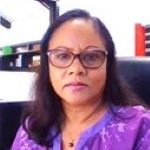 | Dr Rajni Chand (Vice President) is currently the Director for the Centre for Flexible Learning at the University of the South Pacific (USP). She also holds the position of the Director of PACFOLD (Pacific Centre for Flexible and Open learning for Development) which is hosted and managed by USP. Additionally, Rajni is the Oceania focal point for ICDE’s Quality Network. She has more than 25 years of experience of high school and tertiary teaching in the South Pacific region, including Fiji, Australia and New Zealand as well as broad experience in open, distance and flexible learning. Rajni holds a MA in Applied Linguistics from Griffith University and a PhD in Applied Linguistics from Otago. Linkedin: |  |
 | Rachel Whalley (Treasurer) is an ePrincipal with Kōtui Ako Virtual Learning Network Aotearoa. Her expertise is in blended and online learning, project planning and development, online learning communities, pedagogy, and curriculum development for online teaching and learning. Rachel is passionate about equity and access to education and the power of technology to connect communities and open up new opportunities to learn. | |
 | Liz Rawlings (Secretary) is Designer Digital Learning at NorthTec, working remotely from Ōtepoti. Her expertise is in blended and online learning development, educational publishing and distance learning. Liz has been involved in incorporating Mātauranga Māori in course development and improving access to education via new delivery models. | |
 | Dr Simon Paul Atkinson PFHEA (Committee member) is a Principal Fellow of the Higher Education Academy and Editor of the Journal of Open, Flexible and Distance Learning. He has over 25 years experience in the tertiary sector as Head of Learning Design at the Open Polytechnic (2018-2022), Associate Dean of Learning and Teaching at BPP University (2011-2018), Academic Developer at the LSE (2010-2011), Director of Learning and Teaching at College of Education at Massey (2008-2010), Head of Centre for Learning Development at the University of Hull (2003-2008), Academic Developer at the Open University (UK) (2001-2003) and has worked in communications and micro-enterprise charity roles before that. |  |
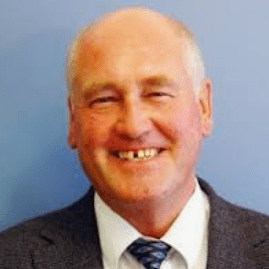 | Andrew Higgins (Committee member) is retired but retains close links in the schooling sector. His research involved work on the provision of education to isolated students and later on in the use of technologies in education. He has been a member of various Ministerial advisory committees in New Zealand and Queensland and was formerly a university Director. He is a Life Member of FLANZ. | |
 | Gloria undertakes applied design research in novel educational practice with Bridging Design Prototypes. She is co-founder at OceanBrowser Ltd. - developers of OB3 (New Zealand) and an adjunct senior lecturer at the University of Sydney Medical School (Australia). Gloria is qualified and experienced in conducting research that informs product design, demonstrates its efficacy, and drives meaningful learning in education. Connect with Gloria via LinkedIn or visit www.gloriagomez.com | |
 | Kristina Hoeppner (Committee member) is the project lead for the open source ePortfolio platform Mahara, working for Catalyst IT in Te Whanganui-a-Tara. She traded hemispheres in 2010 and has been supporting and working with the New Zealand and worldwide community of educators, learning designers, and education innovators in both formal and informal learning settings to create positive and supportive learning environments. | |
 | Lucie Lindsay (Committee member) is DP (Primary) and eLearning Lead at Kōtui Ako Virtual Learning Network Aotearoa and is a Lead Facilitator in Kōtuitui Online Teachers Network of Expertise. Lucie holds a Master of Professional Studies in Education from the University of Auckland and PhD in Education from the University of Sydney. Her background is in Learning Design (University of Auckland), teaching, and technology roles. She likes how flexible learning increases access, provides opportunities to innovate, and to continue learning | |
 | Natalia Kurikova (FLANZ webmaster) is an education technology specialist with extensive experience at the intersection of teaching and digital systems. Currently working at the University of Canterbury as an Educational Technology Consultant, she supports Moodle and Totara platforms, collaborating with technical teams, learning designers, and stakeholders to develop scalable digital solutions aligned with institutional goals. With a background in language teaching and a passion for user-centered design and digital accessibility, Natalia brings together pedagogical insight and technical expertise. She is committed to making learning systems work smarter for both educators and learners. | |
 | Mohammed Hussein (Committee member) is a digital learning leader with over 20 years of experience designing transformative education solutions for the Pacific region. Specialising in accessible, technology-enhanced learning, he creates scalable models that combine pedagogical excellence with innovative digital approaches. His distinguished academic background in both education and information systems informs a unique, dual perspective approach to learning design, creating accessible, culturally responsive experiences that empower diverse communities. He drives institutional transformation through comprehensive digital capacity building, research informed edtech integration and the development of future ready learning ecosystems. He actively contributes to advancing regional education through collaborative projects, policy guidance, and the mentoring of emerging professionals in digital pedagogy. | |
 | Barnabas Sahayam (Committee member) is a Learning Experience Designer at the Centre for Flexible Learning (CFL), with over 20 years of experience in higher education. With a strong background in facilitation, educational technology, and learning experience design, he is passionate about creating learning environments that genuinely connect with students. His work focuses on developing high-quality print, blended, and online courses, always with a regional perspective in mind. He is particularly interested in how design and technology can support STEM education and enhance online learning experiences. He's driven by a genuine belief in the power of education to transform lives. | |